If you’ve ever worked with power electronics, data storage, or industrial automation, chances are you’ve interacted with magnetic memory devices—even if you didn’t stop to notice the quiet, critical component making it all work: the iron core. As someone who’s spent the last 12 years as the owner and lead engineer of a specialty iron core supply company, I can’t count how many times customers have asked me, “Why does that core matter? Couldn’t we just use a chunk of plastic or copper wire instead?” The short answer? No. The long answer is about a perfect convergence of material science, electromagnetic principles, and the unglamorous, make-or-break role iron cores play in the reliability, capacity, and longevity of magnetic memory. Iron Core
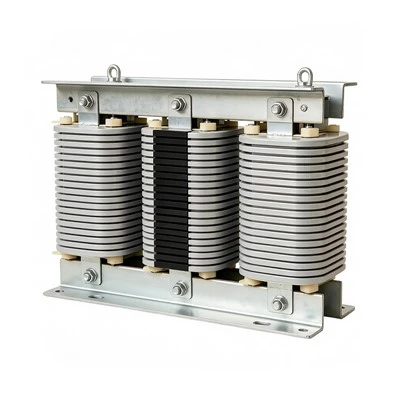
Let’s start by grounding this in the basics, no jargon overload promised. Magnetic memory devices—think of core memory, MRAM (magnetoresistive random-access memory), and even the tiny magnetic read heads that pull data from your laptop hard drive—store information using tiny magnetic domains: microscopic regions where iron or other ferromagnetic materials have their atomic magnetic moments aligned in a specific direction. A “0” might be a north-pointing domain, and a “1” might be south-pointing, for example. The core’s job is to control, amplify, and stabilize that alignment so the data doesn’t flip randomly from heat, electrical noise, or physical vibration.
At the heart of this is permeability. Permeability is a material’s ability to conduct magnetic flux—think of magnetic flux as the invisible “force field” that carries the signal between the memory’s control circuit and the tiny magnetic domains storing data. Iron, especially the high-purity, low-alloy grades we specialize in at our company, has a permeability that’s thousands of times higher than air or plastic. That means it can trap and guide magnetic flux like a superhighway, instead of letting it diffuse into the surrounding environment. Without an iron core, the magnetic field generated by the memory’s control coil would spread out haphazardly, wasting 90% or more of the energy and failing to reliably flip the tiny domains. Early core memory, which was the primary RAM for computers from the 1950s all the way into the 1970s, relied entirely on tiny woven iron cores strung on copper wires; each core stored one bit of data, and those cores’ permeability was why that old tech was so dependable for decades. I still work with vintage computer enthusiasts who repair and restore those old systems, and 9 times out of 10, their failed cores are either low-purity iron that’s corroded or cores that were improperly annealed to retain their permeability.
Next up is coercivity, and this is where the choice of iron makes all the difference. Coercivity is a material’s resistance to having its magnetic alignment changed by unwanted external fields. For magnetic memory, you need a fine balance: the core must be easy enough to magnetize when you’re writing data, but hard enough to hold that alignment when you’re not—no one wants their saved files vanishing because a power line hum knocked the magnetic domains off-kilter. Soft iron, the grade we manufacture for memory applications, has low coercivity compared to hard iron used in permanent magnets. But not just any soft iron will do. We use a grain-oriented silicon-iron alloy that’s processed to have a uniform crystal structure, which lowers coercivity even further while boosting permeability. This grade is optimized to avoid what’s called “hysteresis loss”—the energy wasted as heat when a material’s magnetic field reverses direction. For magnetic memory, especially high-density MRAM that’s packing billions of tiny bits onto a single chip, hysteresis loss means less energy to write each bit, less heat buildup, and longer lifespans. A few years back, we had a customer designing next-gen industrial MRAM for factory floor controls; they were using a cheap imported iron core that had 3x higher hysteresis loss, so their chips were overheating and failing after 18 months of continuous use. Switching to our custom annealed soft iron cores cut their operating temperature by 12 degrees Celsius and extended product life to 10 years. That’s the impact this component has, even when it’s invisible to the end user.
Now, let’s talk about size and density, because that’s what drives modern memory technology. The old core memory I mentioned was bulky—each core was a millimeter or two across, so a 1MB system would take up an entire closet. Today’s MRAM is packing bits that are just a few nanometers wide, and the iron cores that support them have shrunk right along with them, down to micrometer scale for advanced automotive and consumer electronics. But scaling down isn’t just about making things smaller. When you reduce the size of a magnetic component, the surface area-to-volume ratio skyrockets, which makes it more prone to electrical losses and magnetic interference. High-purity iron is non-conductive enough (when alloyed properly) to avoid eddy current losses—another form of wasted energy where electrical currents form on the surface of a magnetic core when exposed to changing fields. Eddy currents generate their own magnetic fields that interfere with the core’s ability to direct flux, so they slow down data access times too. For a memory device that needs to read and write billions of bits per second, even microsecond delays add up. Our micro-scale iron cores are precision-cut and polished to minimize surface imperfections that cause eddy currents, which is why they’re used in the latest automotive MRAM that powers self-driving car sensors—where a data delay of even a millisecond could be a safety hazard.
Another often-overlooked role of the iron core is thermal stability. Magnetic properties change with temperature; if a material’s permeability drops too much at high temps, the core can’t control the magnetic domains, leading to data corruption. Iron’s Curie temperature—the temperature at which it loses all magnetic properties— is around 770 degrees Celsius, which is way higher than the operating temperature of almost all consumer and industrial electronics. Compare that to some alternative materials being tested for memory, like certain ceramics or polymers, which have Curie temperatures 200-300 degrees lower. That means those materials would stop working reliably if your laptop’s fan fails or a factory machine overheats. We recently worked with a medical device company making implantable MRAM for pacemaker data storage; their original core material would degrade at body temperature plus 20 degrees, a problem that would have limited the pacemaker’s lifespan to 5 years. Our high-purity iron cores maintained consistent permeability from -40 degrees Celsius to 120 degrees Celsius, so the pacemaker’s memory is projected to last the full 15 years of the device’s life. That’s a life-saving application where the iron core’s thermal stability isn’t just a feature—it’s a requirement.
I know what some of you are thinking: “What about MRAM that doesn’t use a core? Isn’t it called magnetoresistive memory for a reason?” That’s a fair point, but even spin-transfer torque MRAM (STT-MRAM), the most common type today, relies on tiny iron-based layers in its magnetic tunnel junctions. Those layers are essentially ultra-thin iron cores tailored to align electron spins (the quantum property that generates magnetic moment) instead of bulk magnetic domains. The iron’s atomic structure allows it to manipulate electron spins with precision, which is what lets STT-MRAM write data in nanoseconds and retain it without power for decades. Without that iron’s unique atomic permeability to electron spins, MRAM as we know it wouldn’t exist—we’d still be stuck with slow, power-hungry DRAM that loses data when turned off.
Let’s also talk about the hidden costs of skipping a quality iron core. Some memory manufacturers, looking to cut costs, use low-grade iron or even copper-clad steel cores that haven’t been properly processed. While that might save a penny or two per unit, the long-term damage is huge. We’ve had customers come to us with batches of memory that failed reliability testing after 10,000 hours of use; the issue was cheap cores that had started to rust or develop internal stresses that increased coercivity over time, making the bits impossible to write. Replacing those cheap cores with our stress-relieved, corrosion-resistant iron components fixed the reliability issue, and the customer didn’t have to redesign their entire product line—a win for everyone. In the industrial and automotive sectors, product recalls because of memory failures can cost millions, so investing in a high-quality iron core isn’t an expense—it’s a risk mitigation strategy.
As someone who’s been in the iron core supply business for over a decade, I’ve seen the field evolve from the bulk woven cores of the 1960s to the micro-scale precision parts used in today’s phones and cars. Every time a new memory technology comes out—whether it’s 3D MRAM for data centers or next-gen MRAM for wearable devices—our team works closely with engineers to tailor iron cores to their specific needs: adjusting permeability for high-speed data, fine-tuning coercivity for high-density bit packing, or modifying thermal stability for extreme environments. We don’t just sell cores; we solve problems. A few months back, a startup was developing a portable industrial data logger that needed memory that could handle -50 degree temperatures in arctic research stations; they couldn’t find a core that worked at that temp without adding bulky heating elements. Our team developed a custom iron core with a refined grain structure that maintained permeability down to -70 degrees, and the data logger’s design got 30% smaller and 20% more energy efficient.
So what’s the takeaway here? The iron core in a magnetic memory device isn’t just a random metal part—it’s the backbone that makes data storage reliable, fast, and scalable. It controls magnetic flux to save energy, balances coercivity to keep data intact, scales to tiny sizes for high-density memory, stabilizes performance across temperatures, and prevents costly failures down the line. For manufacturers, choosing the right iron core isn’t a trivial detail; it’s what turns a good memory product into a great one that stands the test of time.
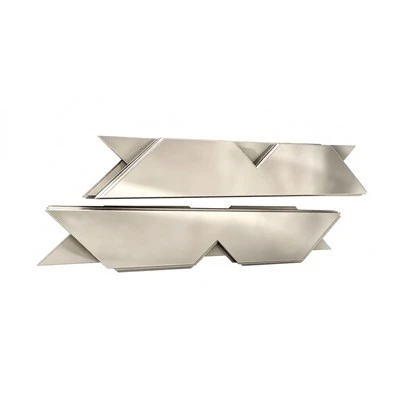
If you’re a memory designer, electronics engineer, or manufacturing leader looking to upgrade your core components, whether you’re working on vintage system restorations, industrial controls, automotive safety systems, or next-gen consumer tech, let’s connect. We specialize in custom, high-performance iron cores tailored to your exact specifications—no off-the-shelf one-size-fits-all solutions. We test every core for permeability, coercivity, and thermal stability to make sure it meets your requirements, and we work with your timeline to deliver parts that help your product succeed. Reach out to our team today to discuss your project needs and get a quote.
Transformer Accessories References
- Bozorth, R.M. (1993). Ferromagnetism. Wiley-IEEE Press.
- Parkin, S.S.P., et al. (2008). "Magnetoresistive random access memory (MRAM)". Proceedings of the IEEE, 96(11), 1981-1998.
- Jiles, D.C. (2015). Introduction to Magnetism and Magnetic Materials. CRC Press.
- IBM Corporation. (1952). "The Development of Core Memory". IBM Journal of Research and Development, 1(1), 36-45.
- Wolf, S.A., et al. (2001). "Spintronics: A spin-based electronics vision for the future". Science, 294(5546), 1488-1495.
Wuxi Zhongpu Electric Co., Ltd.
As one of the most professional iron core manufacturers and suppliers in China, we also support customized service. Please feel free to wholesale bulk high quality iron core made in China here from our factory. Welcome to contact us for pricelist.
Address: No.52 Jiankang Road, Donggang Town, Xishan District, Wuxi City, Jiangsu Province
E-mail: 13585006135@163.com
WebSite: https://www.zhongpuelectric.com/
