If you’ve ever driven across a long, winding bridge on a rainy morning or watched a family take a walk across a footbridge on a sunny weekend, you’ve probably glanced at those tall, sturdy metal bars running along the edge: bridge guardrails. I’ve spent the last 12 years as a bridge guardrails supplier, and over that time, the most common question I hear isn’t about pricing or lead times—it’s about whether these guardrails are actually regulated, and what rules we (as suppliers, and as the construction teams installing them) have to follow to keep people safe. Bridge Guardrails
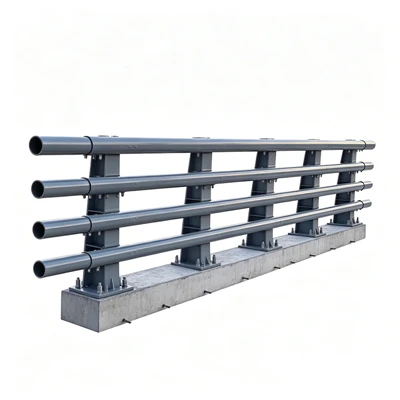
Let’s cut through the noise first: yes, bridge guardrails are some of the most heavily regulated road safety components in the industry. The regulations aren’t just random rules dreamed up by bureaucracies—they’re built on decades of crash data, engineering research, and lessons from bridges where guardrails failed to do their job. As someone who’s shipped guardrails for over 200 bridge projects across the U.S., I’ve watched these standards evolve, and I’ll walk you through what they actually mean for anyone designing, building, or maintaining a bridge.
First, let’s ground this in who sets the rules. In the U.S., federal regulations come from the Federal Highway Administration (FHWA), which is part of the Department of Transportation. The FHWA doesn’t write every single detail of every guardrail, but it adopts national standards that all states must follow to receive federal funding for bridge projects. Those standards are detailed in the Manual for Assessing Safety Hardware (MASH)—that’s the big book that replaced the old AASHTO (American Association of State Highway and Transportation Officials) standards back in 2016, with updates in 2020 to reflect newer crash research. For non-highway bridges, like pedestrian footbridges or small local overpasses, many states also adopt their own versions of MASH, sometimes adding stricter rules for local conditions.
What do these regulations actually require, beyond just “make a guardrail”? Let’s break down the non-negotiables that every guardrail we supply has to meet. The first and biggest is crash performance testing. MASH requires every guardrail system to undergo full-scale crash tests with actual vehicles that simulate real-world scenarios. For example, a guardrail on a highway bridge has to withstand a 5,000-pound pickup truck moving at 60 miles per hour, hitting it at a 25-degree angle. The test isn’t just about not breaking—the guidelines specify exactly how the truck should behave: it can’t penetrate the guardrail, it can’t flip over it, and it should exit the crash path safely without veering into oncoming traffic. For smaller, lower-speed bridges, the tests are scaled down—think 2,000-pound cars going 30 mph, but the safety bar is still non-negotiable.
Then there are structural requirements that go beyond crash tests. Guardrails have to be made of specific materials with set strength ratings. For steel guardrails (the most common type used on highway bridges), the standard is hot-dip galvanized steel, which is coated to resist corrosion—critical for bridges that sit over water, where salt from de-icing in winter or humidity can eat away at metal. The thickness of the steel bars is also regulated: for a standard W-beam guardrail, the metal has to be 10-gauge, not thinner, because thinner metal would bend too easily in a crash. For concrete parapet guardrails (another common type, used on many overpasses), the rules cover the mix design—how much cement, aggregate, and water goes into the concrete, plus the size and spacing of rebar inside, so it doesn’t crack under impact.
Pedestrian guardrails are a whole separate category, and the regulations here are even stricter in some ways. A bridge that has a sidewalk is required to have a guardrail that prevents people (especially kids) from falling over the edge. MASH’s pedestrian guardrail standards set a minimum height of 42 inches, but many states bump that up to 48 inches for bridges over 10 feet high, just to be extra safe. The spacing between vertical bars is also regulated—no gaps wider than 4 inches, so a small child’s head can’t get stuck. I remember a project a few years ago for a city park footbridge where the original design had 6-inch gaps; we had to fabricate custom bars to narrow the gaps to 3.5 inches to meet local rules, and that’s not unusual. Adjustments for clear zone space matter too: if a bridge’s guardrail is too close to the edge of the road, it can actually be a hazard for vehicles that go off the road, so regulations specify the exact distance from the edge of the bridge deck to the inner face of the guardrail.
It’s not just new construction—regulations also apply to maintenance and replacement of existing bridge guardrails. A lot of people don’t realize that if a state or local government is repairing a guardrail that was damaged in a crash, they have to replace it with a system that meets current standards, not the ones that were in place when the bridge was built. Old guardrails installed before MASH might have worked for 30 years, but if they’re damaged now, they can’t be patched and kept—they have to be replaced with a system that passes modern crash tests. That’s been a big shift over the last decade, and it means demand for code-compliant guardrails is steady, even for smaller, older bridge projects.
As a supplier, this isn’t just about selling metal bars and concrete. We have to track every single standard that applies to a project, because a mistake here can hold up the entire construction schedule—and more importantly, put lives at risk. For example, last year we had a project in Oregon where the state required a guardrail that could handle heavy snow loads (since they get 10 feet of snow a winter) and also meet MASH Test Level 3, the standard for highway bridges. Our team worked with the engineering firm to adjust the post spacing (where the guardrail connects to the bridge deck) to handle the additional weight, and we used thicker posts than the standard specification—because the state’s weather rules required it. If we’d just sent a standard W-beam system, the project would have been rejected, and the contractor would have faced delays and extra costs.
I also want to address a common misconception: some people think regulations are a red tape that drives up costs. But over the years, I’ve seen the opposite. When the FHWA updated MASH in 2016, we had to invest in new testing equipment at our factory to make sure the guardrails we produce pass the new crash tests. But that investment meant our customers didn’t have to spend extra money testing and reworking systems that don’t meet modern standards. A guardrail that meets all the regulations might cost a bit more upfront, but it also reduces the risk of costly crashes, liability claims, and fines that come from using non-compliant equipment.
Wait, what about the parts that aren’t visible? The fasteners that hold guardrails to the bridge deck, for example—regulations specify the type of bolts, the torque they have to be tightened to, and even the material they’re made of (they have to be galvanized to match the rest of the system). I’ve heard horror stories from contractors who used cheap, untested bolts on a small local bridge, and a year later, the guardrail shifted because the bolts weren’t strong enough. That’s exactly why those small, easy-to-overlook details are in the regulations—they’re not just random rules.
Now, I know a lot of you reading this might be part of a small town public works team, a construction contractor, or an engineering firm working on a bridge project and trying to make sure your guardrail is compliant. The good news is, the standards are publicly available (you can access a copy of MASH for free on the FHWA website) and most state transportation departments have a bridge safety division that can answer specific questions about local rules. But as a supplier, we’ve already done the homework for you. Every guardrail we fabricate comes with a certificate of compliance, proving it meets all the relevant crash and structural standards, so you don’t have to do the testing yourself.
For anyone working on a bridge project—whether it’s a 100-foot footbridge in a small town or a mile-long highway overpass—guardrail compliance isn’t something you can afford to cut corners on. I’ve been in this industry long enough to know that a guardrail that meets the right regulations isn’t just a piece of equipment; it’s the thing that keeps a driver from going over a bridge edge, that keeps a kid from falling while walking to school, that gives peace of mind to everyone crossing that structure.
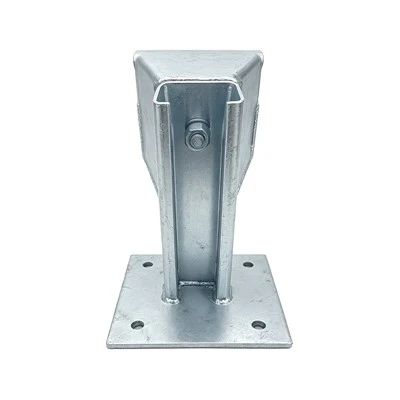
If you’re planning a bridge project, or you need to replace old or damaged guardrails on an existing structure, we can help you navigate all the regulatory requirements. We work with teams across the country to design, fabricate, and deliver code-compliant guardrails tailored to your project’s specific needs, whether that’s meeting FHWA standards, state-specific rules, or unique local conditions. Reach out to our team to discuss your project and get a quote that fits your timeline and budget.
Traffic Signs References
Federal Highway Administration. (2020). Manual for Assessing Safety Hardware (MASH), 2nd ed. U.S. Department of Transportation.
American Association of State Highway and Transportation Officials. (2018). Guide Specifications for Bridge Railings. AASHTO.
National Cooperative Highway Research Program. (2017). Guardrail Crashworthiness: Lessons from Field Tests and Real-World Crashes. NCHRP Report 882.
Guanxian Hongrong Traffic Facilities Co., Ltd.
As one of the most professional bridge guardrails manufacturers and suppliers in China, we also support customized service. Please feel free to wholesale bulk durable bridge guardrails in stock here from our factory. Welcome to contact us for quotation.
Address: South side of the road, 100 meters west of the intersection of Baiyang Road and Donghuan Road, Chongwen Subdistrict, Guan County, Liaocheng City, Shandong Province
E-mail: hongrongli568@163.com
WebSite: https://www.hongrongguardrail.com/
