Hey there, thanks for stopping by—so glad you’re here, whether you’re a procurement manager hunting for the right seal, a mechanical engineer scratching your head over gasket specs, or just someone who’s realized that the tiny rubber end gasket on your pipeline or pump matters way more than it should. Full transparency: I’ve been supplying rubber end gaskets for over 12 years, and I can’t tell you how many times a customer has called me panicking because they bought the “generic” gasket online and it leaked, or cracked after two weeks, or just didn’t fit right. Today, we’re breaking down the main types you’ll come across, what makes each different, and when you actually need which one. No boring jargon, no fluff—just straight talk from someone who’s packed these gaskets into more boxes than I can count. Rubber End Gasket

First off, let’s cut to the chase: a rubber end gasket (sometimes called a flange end gasket, pipe end gasket, or even a blind gasket, though blind gaskets are a tiny bit different) isn’t just a circle of rubber. It’s designed to create a tight, leak-proof seal between two pipe flanges, valve ends, or any equipment that needs a fluid (or gas) tight connection. The difference between types? It all comes down to what the gasket’s made of, its thickness, its design, and what environment it’s going to live in. Pick the wrong one, and you’re looking at downtime, messy leaks, or even safety hazards. Trust me, I’ve heard it all—from a food and beverage plant that had to shut down production because their gasket failed, to a construction site where a water line leaked all over a job.
Let’s start with the most common type you’ll see: EPDM rubber end gaskets. EPDM stands for Ethylene Propylene Diene Monomer, and it’s basically the workhorse of the gasket world. Why? It’s cheap, flexible, and holds up really well to weather, UV rays, and most water-based fluids. I use EPDM for like 40% of my orders—residential plumbing, HVAC systems, outdoor water pipes, even some general industrial stuff. Wait, but here’s the catch: EPDM sucks around oils, fuels, and most chemicals. If you’re working with gasoline, diesel, or any harsh chemicals like acids (mild ones, maybe, but not strong stuff), EPDM isn’t your guy. Also, it can get brittle if you leave it out in super cold temperatures (like below -40°F), so if you’re in a northern climate, you might want something else. One time a guy ordered EPDM for a farm’s fuel line—total disaster, leaked everywhere, he had to replace it with nitrile after that. Lesson learned.
Next up: Nitrile rubber end gaskets (NBR, for Nitrile Butadiene Rubber). If EPDM is the outdoor workhorse, nitrile is the oil and gas specialist. Nitrile is way more resistant to oils, fuels, and petroleum products than EPDM, which makes it perfect for pumps, fuel lines, hydraulic systems, and any industrial equipment that deals with hydrocarbons. It’s also pretty durable—can handle moderate temperatures, up to around 250°F, which is way more than EPDM. The downside? Nitrile isn’t great at UV exposure or outdoor use. Leave a nitrile gasket in the sun for a month, and it’ll crack faster than a dry soda can. Also, it’s not great with polar solvents like brake fluid or some chemicals—if you’re working with those, stick to something else. I recommend nitrile to like 30% of my customers, mostly in auto shops, oil refineries, and construction sites that use heavy machinery.
Then there’s Silicone rubber end gaskets. Silicone is the fancy, high-temperature, food-safe option. If you’ve got a system that runs hot—like steam lines, ovens, or medical equipment—or you need something that can touch food or drink, silicone is your go-to. Silicone can handle temps from like -100°F up to 500°F, which is insane. It’s also super flexible, even when it’s cold, and it’s non-toxic, so it’s perfect for food and beverage processing, pharmaceuticals, and lab equipment. The downsides? It’s way more expensive than EPDM or nitrile, and it’s not great with oils or chemicals. It swells up if you put it near gasoline, so don’t use it for fuel lines. I only sell silicone to customers who need that specific high-temp or food-safe feature—most people don’t, but when they do, there’s no substitute. Just last month, a craft brewery ordered silicone gaskets for their mash tun lines, and they raved about how no leaks since installation. That’s the stuff that makes the long hours worth it.
Wait, let’s not forget Neoprene rubber end gaskets (Polychloroprene, if you want the formal name). Neoprene is kind of a middle ground between EPDM and nitrile. It’s resistant to both oils and UV, which makes it way more versatile than EPDM for outdoor industrial use. It’s often used for water treatment plants, marine applications, and some electrical enclosures—because it can handle being near saltwater (unlike EPDM, which breaks down in saltwater over time) and oil spills. Neoprene is also pretty durable, can handle temps up to around 200°F, which is more than EPDM. The downside? It’s not as oil-resistant as nitrile, so if you’re in a heavy oil environment, nitrile is still better. I suggest neoprene to customers who need something that works both indoors and outdoors, especially in marine or water treatment. A couple years back, a coastal construction company switched to neoprene for their offshore pipe lines, and they told me the gaskets held up way better than EPDM through a whole hurricane season.
Then there’s Viton rubber end gaskets (FKM, for Fluoroelastomer). This is the premium, heavy-duty option for extreme conditions. Viton is basically unbeatable when it comes to chemicals and high temperatures—can handle temps up to 400°F, and resists almost every harsh chemical out there: strong acids, bases, fuels, solvents, you name it. It’s used in aerospace, chemical processing, and any application where failure would be catastrophic. But here’s the thing: Viton is super expensive, way more than silicone even, and it’s unnecessary for most regular applications. If you’re using Viton for a residential pipe, you’re wasting your money. It’s also less flexible at low temps, so it’s not great for cold environments. I only supply Viton to about 5% of my customers—mostly big industrial plants that work with toxic chemicals or high-pressure systems. No joke, a chemical plant I worked with had a leak that shut down their whole facility, so they switched to Viton for all their end gaskets after that. It’s not cheap, but the peace of mind is worth it when you’re dealing with hazardous materials.
Now, let’s talk about a few other differences that aren’t just the material. Wait, right—gasket design matters too, even if it’s the same material. You’ve got full-face gaskets, which cover the entire flange, and ring gaskets, which are just the inner seal. Full-face is more common for standard pipes, because it distributes pressure evenly and prevents cross-leakage between flanges. Ring gaskets are used for high-pressure systems, because they’re thinner and fit tighter, so they can handle more pressure. Also, there’s reinforced vs. non-reinforced gaskets. Reinforced gaskets have a metal insert inside the rubber, which makes them way more durable and able to handle higher pressure. Non-reinforced are cheaper and more flexible, good for low-pressure applications like residential plumbing. I always tell customers: if you’re working with pressure above 100 PSI, go reinforced, no exceptions. I’ve seen non-reinforced gaskets blow out on a high-pressure pump, and it’s not pretty—can damage the whole equipment.
Wait, let’s clear up a common mix-up: rubber end gaskets vs. O-rings. A lot of people call O-rings “end gaskets,” but they’re different. O-rings are round, used for sealing cylindrical joints (like pump shafts), while end gaskets are flat, made for flange joints. Don’t mix those up—buying an O-ring when you need an end gasket will get you a leak every single time. Another mix-up: end gaskets vs. blind gaskets. Blind gaskets are solid, used to close off a pipe end, while end gaskets are the seal between two ends. Small difference, but it trips people up all the time.
So how do you pick the right one? Let’s make a quick cheat sheet to wrap your head around:
- Residential plumbing, HVAC, outdoor water: EPDM
- Fuel lines, hydraulic systems, heavy machinery: Nitrile
- Food/beverage, steam, medical equipment: Silicone
- Marine, water treatment, outdoor industrial: Neoprene
- Chemical processing, aerospace, extreme temps: Viton
But wait, that’s just the basics—there are hybrids too, like EPDM-nitrile blends for extra oil resistance, or silicone-EPDM for better cold flexibility. If you’re not sure, don’t guess—ask. That’s why I’m here.
I’ve been doing this for over a decade, and the number one mistake I see is customers trying to save a buck by buying the cheapest gasket they can find, not matching it to their application. That cheap EPDM from Amazon for your fuel line? It’ll leak, you’ll have to replace it twice, and end up spending more than if you’d just bought the right nitrile one in the first place. Or the Viton gasket for your garden hose? Total waste.
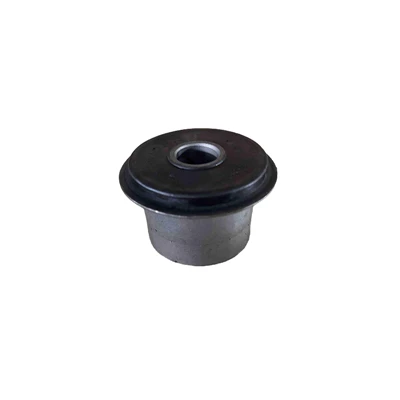
At the end of the day, a rubber end gasket is a small part, but it’s the difference between a smooth operation and a total headache. Whether you’re a small business owner, a construction manager, or a plant engineer, getting the right gasket saves you time, money, and stress. If you’re not sure which type is right for your specific setup—whether it’s pipe size, pressure, fluid type, or environment—hit me up. I’ll walk you through it, no sales pitch, just straight advice. I’ve got samples of all these types, and I can tell you exactly what’ll work for your project. Don’t let a bad gasket derail your next job—let’s find the right seal for you.
Rubber Bushing References:
- "Rubber Gasket Material Selection Guide," American Society of Mechanical Engineers (ASME), 2022.
- "Elastomer Compatibility Handbook," Society of Tribologists and Lubrication Engineers (STLE), 2021.
- "Sealing Technology for Pipe Flanges," Piping Engineering Journal, Vol. 18, No. 3, 2020.
- "Food-Grade Elastomers in Processing Equipment," Food and Drug Administration (FDA) Guidance, 2023.
- "Viton Fluoroelastomer Properties and Applications," DuPont Performance Elastomers, 2022.
Anhui Anling Rubber & Plastic Co., Ltd.
We are one of the most professional rubber end gasket manufacturers and suppliers in China, featured by quality products and good service. Please rest assured to wholesale bulk rubber end gasket in stock here and get quotation from our factory. We also accept customized orders.
Address: 3.9-Square-Kilometer Industrial Park in the Development Zone, Anqing City, Anhui Province
E-mail: anhuianling@126.com
WebSite: https://www.anhuianling.com/
