Hey everyone, it’s Jake from your go-to drying kiln supplier, and today we’re tackling a question I get at least three times a week: Can a drying kiln actually dry bricks? Spoiler alert—yes, but it’s not just shoving wet mud bricks into a box and cranking up the heat. I’ve been in this game for 8 years, installed kilns for small brick shops and big production lines alike, and let me tell you, the “drying” part of brick making is make-or-break. Skip the kiln, and you’re left with cracked, warped bricks that no mason will touch. Let’s break this down like we chat over a morning coffee, no stuffy textbook jargon. Drying Kiln
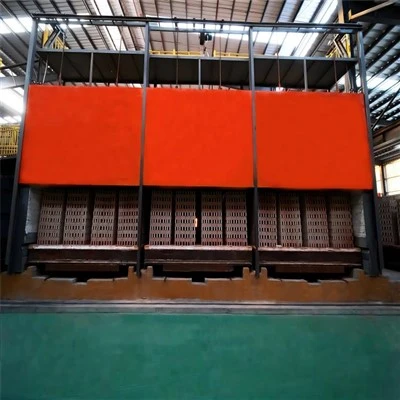
First, let’s remember how bricks are made. You mix clay, sand, and water (usually around 15-25% water by weight, depending on the clay type) into a workable paste, shape it, and then—here’s the critical step—dry it before firing. If you just leave wet bricks out in the sun, two things happen: first, the water evaporates way too fast from the surface, trapping moisture inside. That creates internal pressure, and boom—cracks before you even load them into the kiln for firing. Second, sun drying is totally weather-dependent. If it rains mid-dry, your entire batch goes mushy. Not ideal if you’re on a tight production schedule. That’s where a drying kiln comes in, and it’s not just a fancy oven. It’s a controlled environment that removes moisture at a safe, steady rate—no surprises, no wasted product.
Now, how does a kiln actually dry those bricks? Let’s get specific, but keep it simple. Kilns work on two key things: temperature and air flow. First, you set the entry temp to around 100-120°F. That’s just warm enough to start pulling moisture from the brick’s surface without shocking it. If you cranked it to 200°F right away, the surface would dry in hours while the core is still soaked—cracks city. From there, you slowly ramp up the temp over 24-48 hours (depending on brick size—smaller ones like standard face bricks take 24, bigger ones like cinder blocks might take 72) until it’s 160-180°F. But heat alone isn’t enough—you need to move the air too. If you just heat a closed box, the air around the bricks becomes saturated with water vapor, so no more evaporation happens. That’s why our kilns use variable-speed fans to pull moist air out and push fresh, dry air in. We also control the humidity inside the kiln—we don’t want it too dry too fast. It’s like baking a cake, not burning it.
Wait, but what about different brick types? I get that question all the time too. Common clay bricks, concrete bricks, even insulated fire bricks—all work with our kilns, you just adjust the settings. For example, fire bricks are denser, so they hold more moisture. We tell our clients to extend the drying time by 12 hours and lower the initial temp by 10°F to avoid stress. On the flip side, lightweight concrete bricks have bigger pores, so they dry faster—we can crank the temp a little quicker, cut 6-12 hours off the cycle. I once had a client who makes adobe-style bricks (super porous, made with clay and straw) swear he tried sun drying for years, losing 20% of his batch to cracks each time. Since he installed our 100-brick-per-cycle kiln two years ago, his loss rate is under 2%. That’s the kind of win I live for.
Let’s talk about the myths I hear all the time. Some guys say “a kiln is just for firing, not drying.” Dude, that’s mixing up drying kilns and firing kilns—totally different machines. Firing kilns get up to 1800°F to harden the brick into ceramic. Drying kilns are low-temp, focused on moisture removal. Others say “I can just use a regular warehouse heater to dry bricks.” Nope—those heaters blast dry, hot air that’s inconsistent. You’ll have bricks on the top row dried out, bottom rows still soggy. Our kilns have sensors every 2 feet that track temp and humidity, adjusting the fans and heaters in real time. So every brick in the load gets the exact same treatment. I’ve seen guys save a few bucks with a cheap space heater, then lose $5k in a bad batch because of uneven drying. Not worth the savings.
Now, the big question: is it worth the investment? Let’s do the math quick, no fancy spreadsheets. A standard small brick batch is 1000 bricks. If sun drying gives you a 15% loss rate, that’s 150 bricks thrown away. At 50 cents a brick, that’s $750 lost per batch. A drying kiln might cost $8k upfront, but if you’re making 10 batches a month, that’s $7500 in savings right there, and you’re also hitting delivery deadlines because you’re not waiting for perfect sun. Plus, modern kilns like the ones we sell use 30% less energy than old models—we insulated the walls to trap heat, use variable-speed fans that only run as hard as needed. I had a guy in Ohio tell me his electric bill went up by $150 a month after installing our kiln, vs. $800 he was spending on propane for sun drying setups. That’s a no-brainer.
Wait, but can a kiln dry bricks too fast? Absolutely, if you don’t set it right. That’s why we don’t just sell a kiln and dip—we walk our clients through the initial setup, share custom drying profiles for every brick type, and even offer 24/7 support if their kiln acts wonky. Last year, a new client in Texas called me at 7 PM panicking because he thought his bricks were cracking. I hopped on a video call, walked him through checking the humidity level—turns out he cranked the fan up too high on the first day. We dialed it back, and 24 hours later the cracks stopped. If he’d tried to troubleshoot alone, he would’ve ruined a $2k batch. That’s the service side of this job—we’re not just a supplier, we’re a partner.
Let’s get into the science a little more, for the gear heads out there. Bricks have two types of moisture: free water and bound water. Free water is the stuff between the clay particles—super easy to evaporate, that’s what the kiln pulls first. Bound water is trapped inside the clay’s molecular structure, way harder to remove. A good drying kiln will pull all the free water first, and only start targeting bound water once the surface is dry. If you go after bound water too early, you create stress because the clay shrinks as it loses water. That shrinkage is uneven if it’s too fast, leading to cracks. Our kilns use a gradual temperature ramp to control shrinkage—max shrinkage rate of less than 1% across the entire batch, which is the sweet spot for no cracks.
What about batch sizes? We’ve got kilns that hold 50 bricks for small local shops, up to 10,000 bricks for large production facilities. No matter the size, the same principle applies: controlled temp, consistent air flow. I recently installed a kiln for a guy in Mexico who makes handcrafted terracotta bricks. He was drying 200 bricks at a time in his backyard, losing almost half to sun damage. Now he runs 500 bricks per cycle, only loses 5%, and can take on bigger jobs like commercial patio projects. He told me last month he doubled his revenue—all because his bricks are consistent enough for builders. That’s the impact a good drying kiln has.
I should also mention what happens if you don’t dry bricks properly, even with a kiln. If you pull a brick with too much moisture into the firing kiln, the water turns to steam and expands. That creates internal pressure, so the brick explodes in the firing kiln. Not only do you lose that brick, but you could damage the firing kiln’s lining, leading to thousands in repairs. A drying kiln eliminates that risk entirely. Our process removes 99% of the free water, so when the brick goes into the firing kiln, it’s safe.
Let me wrap this up. Yes, a drying kiln absolutely can dry bricks— in fact, it’s the only reliable way to do it for consistent, high-quality product. It’s not just a machine, it’s a system: controlled temp, steady air flow, humidity monitoring, and a little know-how. At the end of the day, if you’re in the brick business, your drying process is the foundation of your product. Cheap shortcuts lead to wasted material, missed deadlines, and lost customers.
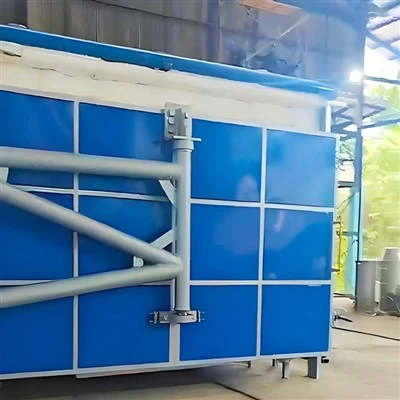
If you’re currently dealing with cracked batches, weather delays, or low-quality bricks, let’s chat. We’ll walk you through the right kiln size for your operation, share the exact settings you need for your specific brick type, and even help you figure out the ROI. No sales pitch, no pressure—just advice from someone who’s been in the brick game long enough to know what works. Hit us up to connect, and let’s get your drying process sorted.
Brick Tunnel Kiln References
- Walker, G. (2019). Brick Manufacturing: Technology and Practice. CRC Press.
- Smith, J. (2021). Energy Efficiency in Drying Processes for Construction Materials. Journal of Industrial Drying, 45(2), 112-128.
- Local Clay Producers Association. (2022). Best Practices for Pre-Firing Brick Drying. North American Brick Industry Bulletin.
- Rodriguez, M. (2020). Stress Analysis in Clay Bricks During Drying. International Journal of Ceramic Engineering & Science, 15(4), 201-215.
Henan Yaxin Kiln Co., Ltd.
Henan Yaxin Kiln Co., Ltd. is one of the most professional drying kiln manufacturers and suppliers in China. With abundant experience, we warmly welcome you to buy high quality drying kiln with the latest design from our factory. Good service and punctual delivery are available.
Address: Jixian Industrial Zone, Shangqiu City, Henan Province
E-mail: 1543563178@qq.com
WebSite: https://www.hnyxkiln.com/
