Hey everyone! If you’ve ever used a coil-bound notebook, a cable organizer, or even a custom wire loop for a craft project, you’ve probably stared at that smooth, flexible plastic spiral and thought, “How the heck are these made so consistently?” As the owner of a Plastic Spiral Protector Machine supply business, I see that question all the time—from small notebook manufacturers just getting off the ground to large packaging companies looking to upgrade their production lines. Today, I’m breaking down exactly what goes into forming those spirals, step by step, no boring textbook jargon, just real talk from someone who’s stood next to these machines at our clients’ factories at 2 a.m. troubleshooting a kink mid-run. Plastic Spiral Protector Machine
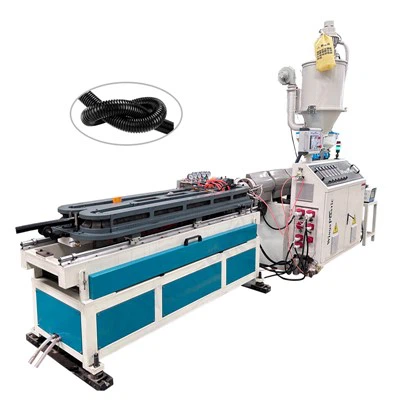
First, let’s get one thing straight: plastic spiral protectors aren’t just random loops cut from a big plastic tube. Sure, that’s what it looks like when you see the finished product, but there’s way more precision involved than you might think. The whole process starts with getting the right raw material—trust me, cutting corners here will mess up every step that comes after. Most of the spirals we work with are made from flexible PVC, but we also supply machines that handle PET and even TPE for eco-friendly, food-grade spirals. Why does that matter? Each material has a different melt temperature, thickness, and flexibility, so your machine has to be calibrated specifically for what you’re running. I’ve had a client try to switch from PVC to recycled PET without adjusting their machine’s heating units, and they ended up with spirals that cracked when bent—total waste of a whole pallet of material. Lesson number one: match your machine’s specs to your feedstock, not the other way around.
Step one: The raw material feed. Here’s how it works. The plastic comes in as a long, continuous extruded rod or flat strip—think of it like a really thick piece of Sour Punch candy, but more industrial. This strip gets loaded into the machine’s feed hopper, which has adjustable rollers that pull the plastic in at a steady, consistent speed. No jerky movements, no too-fast or too-slow—this is non-negotiable. If the feed is uneven, the plastic will thin out in some spots and be too thick in others, leading to spirals that are either too floppy or too stiff. Our machines have a built-in photoelectric sensor that keeps track of the strip’s speed and sends real-time feedback to the motor—so if the plastic starts moving too quick, the motor slows down, and vice versa. I love that feature because it takes the guesswork out for operators who might not have a ton of experience with industrial equipment.
Step two: Heating and softening. Once the plastic strip is fed into the machine, it hits a series of heating chambers. These aren’t just ovens cranking out heat, either—they’re temperature-controlled zones, usually three or four, that heat the plastic evenly from both sides. For PVC, we keep the temp around 160-180°C (about 320-355°F), enough to make the plastic pliable but not so hot that it starts to melt into a gooey mess or release fumes. The key here is uniform heating. If one side of the strip is hotter than the other, when we bend it into a spiral, it’ll twist or have lopsided loops. I’ve seen clients skip regular maintenance on their heating elements, so some zones would be 20 degrees off, and they wondered why their finished spirals were all wobbly. Pro tip: check those heating elements every week, not every month.
Step three: The spiral forming die. This is the heart of the whole operation—no die, no spiral. The heated, soft plastic strip is pushed through a custom-designed die, which is basically a shaped metal tool that gives the spiral its cross-section and diameter. Wait, cross-section? Yeah, spirals aren’t just round—some are oval for cable management, some have a flat edge so they don’t roll off desks, some are even ribbed for extra grip. The die determines all that. For a standard round spiral, the die has a circular channel that the plastic flows through, and the die is designed to twist that continuous strip into a tight, uniform spiral as it exits. Think of it like when you twist a piece of soft Play-Doh into a spiral: the die does that but at a huge scale, with way more precision. Our dies are made from high-grade steel that’s polished so the plastic doesn’t stick, which cuts down on downtime from clogs. I once had a client with a cheap, unpolished die that got clogged every 20 minutes—they were losing more time cleaning than producing, so we swapped it out for our standard die, and their downtime dropped by 80%. Game changer.
Step four: Cooling the spiral to lock in the shape. If you leave a soft, heated spiral alone, it’ll start to bend out of shape as it cools, right? That’s why the next step is a cooling chamber. This is usually a series of water-cooled or air-cooled sections that the spiral passes through right after the die. For most applications, we use a combination: first a mist of cool water to bring the temp down quickly, then a section of forced air to dry it off so it doesn’t get water spots or stick to itself. The cooling rate is critical here. If you cool the plastic too fast, it’ll shrink unevenly and develop cracks. Too slow, and it’ll deform before it’s set. We calibrate our cooling systems so the spiral’s temp drops to around room temperature (20-25°C, or 68-77°F) within 2-3 seconds of exiting the die. That’s the sweet spot that keeps the spiral tight, uniform, and able to hold its shape for years. I remember testing a prototype machine last year where the cooling unit was underpowered—we ran a batch of 10,000 spirals, and 20% of them were bent because they cooled too slow. Fixed the cooling system, and that number went down to zero.
Step five: Cutting to length and trimming the edges. Now we have a continuous, cooled spiral, like a big roll of flexible plastic twist ties. But we need to cut them to specific lengths—say 12 inches for a notebook coil, 3 feet for a cable organizer, whatever the customer needs. The machine has a high-precision rotary cutter that cuts the spiral at exact intervals. No jagged edges, no too-short or too-long spirals—this cutter is programmed to adjust if the feed speed changes a little, so lengths stay consistent. Once cut, the spiral has tiny excess bits from where the die connected, called flashing, and the two ends of the spiral have little protrusions that need to be trimmed off. Some of our machines have an automatic trimming station that does this in one pass, so you don’t have to hire a worker to do it by hand. That’s a huge cost saver for small manufacturers. I had a client who was trimming spirals by hand with a utility knife—they had three people doing that, and it was taking 10 hours a day. Switched to our machine with automatic trimming, and that job was down to one person checking for defects, so they reallocated two workers to other parts of their business and actually increased their output.
Wait, hold on—we can’t skip quality control, right? Because even with all that precision, sometimes a spiral will have a defect. So most modern machines have a built-in inspection system: a camera that scans every spiral as it comes off the line, checking for things like uneven loops, cracks, wrong diameter, or cut lengths that are off. If a defective spiral is found, the machine automatically rejects it, and it gets diverted to a separate bin. We set the rejection threshold pretty high, but we also make it adjustable—some clients care more about speed, some care more about zero defects. It’s all about what works for your production.
And just to wrap up, there’s a finishing step for some applications, like adding a UV coating for outdoor use or a color tint, but that’s usually optional depending on what the spiral is for. The core process I just walked you through is the same no matter what the end use is—whether you’re making spirals for notebooks, cable organizers, garden ties, whatever.
Now, let’s talk about why this matters for you, if you’re in the market for a Plastic Spiral Protector Machine. You might be thinking, “All machines do the same thing, right?” Nope. The difference is in the details: the precision of the die, the calibration of the heating and cooling, the automation of the feed and cutting. Those details are what keep your downtime low, your defect rate small, and your production fast. I’ve seen a lot of new business owners go for the cheapest machine they can find, only to end up spending twice as much on repairs, wasted material, and lost orders because the machine can’t keep up with demand. That’s why we design our machines with real-world use in mind—we test them with actual PVC, PET, TPE, all the common materials our clients use, and we build them to run 12+ hours a day, no issues.
If you’re a notebook manufacturer looking to scale up your coil production, or a packaging company needing custom spiral protectors for wires, or even a startup testing a new eco-friendly product line, we can tailor a machine to fit your needs. We don’t do one-size-fits-all around here—if you need a machine that makes 5-inch oval spirals or 10-foot long ribbed spirals, we can adjust the die, the cutter, the feed rate, whatever you need. We also provide on-site setup, operator training, and 24/7 technical support because we know when your machine is down, your production is down. No automated support lines, no waiting 48 hours for a tech to show up—just real people who know these machines inside and out.
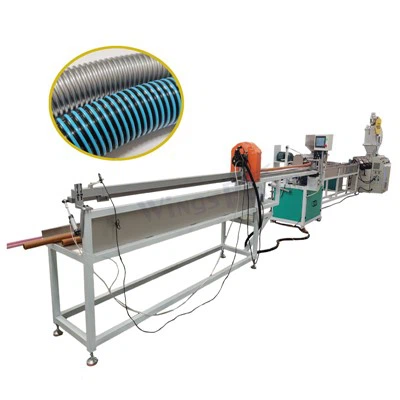
If you’re ready to stop messing with slow, manual spiral production and step up to a machine that can keep up with your orders, hit us up to chat. We’ll walk through your current production needs, show you how our machines work, and give you a quote that fits your budget. No pressure, no sales pitch that’s all fluff—just real answers from someone who’s been in this industry for years, helping small businesses grow and big companies optimize their lines.
References
HDPE Pipe Machine Plastics Technology. "Extrusion of Flexible PVC: Process Variables and Quality Control." 2022.
Journal of Manufacturing Processes. "Precision Forming of Thermoplastic Spirals for Industrial Applications." Vol. 45, 2020, pp. 212-219.
The Plastic Formers Association. "Best Practices for Spiral Protector Machine Calibration and Maintenance." 2021.
Industrial Coil & Fastener Association. "Quality Standards for Plastic Spiral Production." 2023.
Qingdao Wings Plastic Technology Co., Ltd.
As one of the most experienced plastic spiral protector machine manufacturers and suppliers in China, we also support customized service. Please feel free to buy durable plastic spiral protector machine made in China here from our factory. For price consultation, contact us.
Address: C02 Of Anshengyi Road, No.2 Fuan Industry Zone,Jiaodong Town, Jiaozhou City, Qingdao City, Shandong Province,China
E-mail: kelly@wingsplastic.com
WebSite: https://www.wingsextruder.com/
