If you run a CNC slant bed lathe shop—whether you’re a small job shop cranking out custom parts or a mid-sized manufacturer turning out thousands of identical components—you’ve probably thought about coolant once or twice. Most lathe operators fixate on the ways their machine cuts: tool life, spindle speed, part accuracy, maybe even cycle time. Coolant usually lives in the background, something you top off every few weeks, the murky green stuff that gushes from the nozzle right as the tool hits the workpiece. But let’s be real: if you’re a slant bed lathe supplier, we see every day how messing with coolant kills jobs, scrubs tooling budgets, and even sends perfectly good machines into early retirement. Today, let’s break down what coolant actually does for a slant bed lathe, why it’s not just “just coolant,” and how getting it right saves you more cash than you think. CNC Slant Bed Lathe
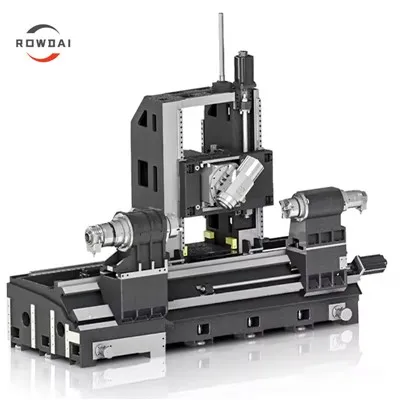
First, let’s cut to the most obvious job: heat control. When a cutting tool bites into metal, it generates insane amounts of friction—like, hot enough to turn steel shavings into glowing dust mid-cut. On a slant bed lathe, which tilts 30 to 45 degrees to push chips away from the cutting zone and keep the tool close to the spindle, that heat has nowhere to hide fast. If you run a job without proper coolant, that heat soaks right into your tool, the workpiece, and even the lathe’s own components.
Here’s where the slant bed design makes this even trickier than a straight bed lathe. Straight bed lathes use flat ways, so chips and coolant tend to pool at the bottom, but slant beds slope everything toward the chip conveyor. That’s great for removing chips, but it also means coolant flows faster and more evenly over the cutting area—if you keep the coolant clean and properly mixed. If the coolant is too thin (you added too much water, forgot to top up the concentrate), it can’t absorb enough heat fast enough. Too thick, and it clogs the small nozzles on the slant bed’s tool turret, so only a trickle hits the cut. We’ve had customers come to us complaining their new slant bed lathe’s tools are wearing out 50% faster than our specs said they should. Nine times out of ten, they were using straight tap water instead of the recommended mix, and the unregulated heat was chewing through carbide inserts like plastic.
Next big one: chip evacuation. Chips are the tiny, sharp shards of metal that break off during a cut. For a slant bed lathe, this is non-negotiable. The whole point of the slant design is to let chips slide away from the cutting zone and out through the chip trough, so they don’t get stuck between the tool and the workpiece, or scratch the brand-new part you just machined. Coolant is the workhorse here. It acts like a conveyor belt, flushing those chips right off the tool face and down the slope to the conveyor. If your coolant is old and full of gunk—grease from dirty chips, dead bacteria from sitting stagnant for months—its flow slows way down. Chips get trapped, they press against the tool, and now you’re not just dealing with heat. You’re getting built-up edge (BUE): a messy layer of melted metal that sticks to the cutting tool, ruins surface finish, and forces you to stop mid-job to clear it. We had a customer running a 100-piece aluminum run a few months back. They were using coolant they hadn’t changed in 6 months. Halfway through the run, chips kept getting stuck, and every part had to be hand-sanded to fix the scratches. Switched to a fresh, properly mixed coolant, and they finished the run 2 hours faster, with zero secondary work. That’s coolant earning its keep.
Then there’s tool life—this is the one that hits your budget the most. Carbide inserts for slant bed lathes aren’t cheap; a single high-performance insert can run $15 to $50, depending on the grade. When coolant does its job, it extends that insert’s life. Coolant cools the cutting edge so it doesn’t soften, lubricates the space between the tool and workpiece to reduce friction, and keeps chips from scratching the tool as they flush away. Bad coolant? You’re changing inserts every 10 parts instead of every 50, or even breaking tools mid-cycle. We test all our slant bed lathes with a specific coolant mix during assembly, and every spec sheet includes the recommended ratio. We can’t tell you how many times a customer has tried to cut corners on coolant, only to burn through their tooling budget in a month. One guy came in with $1,200 in tooling costs in 4 weeks after switching to a cheap, off-brand coolant. When he went back to our recommended mix, his tooling costs dropped to $350 for the same period. That’s a $850 savings—just from getting coolant right.
Wait, let’s not forget about the lathe itself. A slant bed lathe is precision equipment. The ways, the spindle bearings, the tool turret—all have tight tolerances, measured in thousandths of an inch. Coolant isn’t just for the cut; it also keeps the machine’s operating temperature stable. If the spindle gets too hot during a long run, it expands, and suddenly your part diameter is off by 0.005 inches. That might not sound like much, but if you’re running parts that need to fit into an assembly, that’s scrap. Coolant dissipates heat from the spindle and the headstock, keeping everything at a consistent temperature. It also acts as a barrier against corrosion. Slant bed lathes are usually made of cast iron, which rusts if it’s exposed to moisture. Stagnant, dirty coolant holds way more moisture than fresh, treated coolant, and over time, it can cause rust on the ways or the chip conveyor. We see machines come in for repairs where the sloped ways have rusted spots, all because the customer never drained or filtered their coolant. Replacing a set of ways is a $5,000+ job—way more than the cost of maintaining your coolant.
Now, let’s talk about common mistakes people make with slant bed lathe coolant. First, “topping off with straight water” is the biggest one. Coolant is a mix of concentrate (which has lubricants, anti-corrosives, and biocides) and water. If you keep adding water, you dilute the concentrate, so you lose all those key properties. Second, not changing it regularly. Some people think coolant lasts forever, but it doesn’t. Bacteria and fungi grow in it, turning it slimy and acidic. Acidic coolant eats at tool edges and machine parts, and the slime clogs nozzles. We recommend changing coolant every 3 to 6 months, depending on how much you use the machine. Third, not filtering it. Slant beds make a lot of metal chips, and fine shavings get caught in coolant. If you don’t filter those out, they act like sandpaper on your tool and your machine’s ways. A $50 filter change every month saves you $1,000+ in tooling and repairs.
Here’s the thing: as a slant bed lathe supplier, we don’t just sell machines. We want our customers to run them as efficiently as possible, no headaches, no unexpected costs. Coolant is one of the easiest, cheapest ways to do that. You don’t need fancy, top-of-the-line coolant—just the right mix, regular changes, and basic maintenance.
If you’re having issues with your slant bed lathe: tools wearing too fast, part quality being off, chip evacuation problems, or even weird rust spots on your machine, it might be your coolant. We help all our customers troubleshoot these issues regularly, and 70% of the time, the fix is something simple with their coolant.

If you’re looking to upgrade your slant bed lathe, or if you’re having problems with your current machine and want to work through it with a team that actually knows how these machines work—hit us up for a procurement discussion. We can walk you through everything, from coolant maintenance to machine specs that fit your shop’s needs, no jargon, no sales pitches that don’t apply to you.
Surface Grinding Machine Reference
- Machine Tool Coolant Fundamentals, Society of Manufacturing Engineers, 2021
- Slant Bed Lathe Design and Operational Best Practices, Modern Machine Shop, 2022
- Cutting Fluid Selection and Maintenance Guidelines, American Machinist, 2020
Henan Rowdai Machinery Equipment Co., Ltd.
As one of the most professional cnc slant bed lathe manufacturers in China, we’re featured by quality products and good price. Please rest assured to buy high-grade cnc slant bed lathe for sale here from our factory. If you have any enquiry about cooperation, please feel free to email us.
Address: Building 9, E-Commerce Industrial Park, High-Tech Zone, Zhengzhou, Henan, China
E-mail: rowdai@rowdai.com
WebSite: https://www.rowdai.com/
