Hey everyone, CNC Thread Milling

If you’re in the market for CNC thread milling solutions—whether you’re a fabricator, a maintenance team, or an engineer who’s ever stared at a huge part with a “big diameter thread needed” note—you know it’s not like cranking out small M6 or M10 threads on a bench top mill. I’ve been in the CNC thread milling game for over 12 years now, and let me tell you, large-diameter threads (think 100mm and up, not those tiny stuff for aerospace fasteners) come with a whole set of headaches that most new folks don’t see coming until their first botched job. Today, I wanna break down the real challenges we deal with daily at our shop, no fancy jargon that makes your eyes glaze over, and by the end, you’ll get why picking the right supplier (hint: the ones who’ve actually messed up these jobs and fixed ’em, not just sell you a tool kit) makes all the difference.
First off, let’s get one thing straight: “large diameter” here isn’t just a thread that’s bigger than a quarter. We’re talking stuff like 200mm diameter pipe threads for oil rig risers, 350mm precision threads for heavy construction equipment boom joints, even 500mm internal threads for industrial storage tank nozzles. These parts aren’t the little aluminum brackets you mill in an hour. They’re often huge, heavy, clamped down so tight the CNC mill might shake, and if you mess up the thread on one, you’re throwing away a $10k-$50k part, easy. The first big challenge? Tool deflection that turns your perfect thread into a lopsided mess.
Wait, let’s dive into that. When you’re cutting a small thread, your tool is a tiny, rigid tap or end mill—maybe a 6mm solid carbide thread mill. You can crank the feed rate, push the speed, and the tool barely bends. But for a 250mm external thread on a 1-ton steel shaft? The thread mill you need has to be at least 12mm in diameter, often longer than the throat on your CNC mill, to reach the full depth of the thread. That long tool, combined with the side pressure from cutting material (especially tough stuff like 4140 steel, duplex stainless, even hardened tool steel) makes the tool bow mid-cut. I’ve seen it a hundred times: the first few threads come out perfect, then by the time the tool’s halfway around the big diameter, it’s bent just enough that the thread depth is off by 0.2mm on one side. For precision parts, that’s a failure—you can’t just chase those threads with a die. And fixing it? You’d have to scrap the part or re-cut, which adds days and thousands to the bill. We’ve solved this a bunch by switching to variable-pitch thread mills and using high-tensile carbide coatings, but it’s still a constant battle, especially with really long tool overhangs.
Next up is alignment and setup. Large diameter threads mean the pitch circle is way bigger than small threads, so even a tiny misalignment of your tool center line from the part’s spindle axis turns into a huge error. Let’s do the math quick: if your part is a 300mm diameter internal thread, and your tool is off by 0.1mm, that’s a 0.2mm total gap across the whole circumference. For a small M10 thread, that same 0.1mm misalignment is barely noticeable, but on a 300mm thread, that’s enough to make the part not mate with its matching half—like, a huge construction joint that’s supposed to lock together will gap, and that’s a safety hazard. The problem? Most CNC mills are built for medium-sized parts, not 2-ton steel blocks hanging off the vise. When you clamp a massive part, even if you get it aligned right initially, the weight of the part can warp it a tiny bit, or the machine’s spindle can deflect under the load of cutting. I had a client last year who brought in a 400mm diameter tank nozzle—we aligned the tool perfect, ran the first test cut, then after finishing, the part was bent 0.3mm because the vise jaws were a little loose. We had to scrap the first cut, re-align the part with custom supports, and it added two days to their lead time. That’s the stuff you don’t see in a tool catalog.
Then there’s chip control. Small threads make small chips that get blown away by a coolant hose or compressed air. But large diameter threads—especially deep internal ones, like a 150mm deep 250mm internal thread—make big, curly chips that get trapped in the thread grooves. If a chip gets stuck, the next pass of the thread mill will snag it, snap the tool, scratch the part, or throw off the depth. We had a job early on for a paper mill that needed 10 of these 300mm deep internal threads, all in stainless steel. First two jobs, we snapped three tools because chips were getting packed in the grooves. We tried every trick: higher coolant pressure, through-tool coolant, pecking cycles, even adding a little extra retract between passes. Turns out, with really deep big internal threads, the coolant can’t reach the bottom of the thread groove, so chips just bake there. Now we use custom coolant nozzles aimed directly at the cutting edge, and we slowed the feed rate just a tiny bit to let chips curl out without getting stuck, and that cut our tool breakage on those jobs by 90%. But for shops that don’t have a supplier willing to tweak the CNC program or use custom setups, chip control is a killer for large diameter jobs.
Oh, and material variability. Small parts are usually from a single batch of material, tested, consistent. Large parts? They’re often one-offs, cut from a big billet that might have hidden inclusions, hardness variations, or even just a little porosity from casting. Last month we got a 220mm external thread job on a cast iron shaft. The first half was soft, cut perfect, then the second half of the shaft had a hard spot—we tried to push through, and the tool chipped bad, ruining the thread. We had to stop, test the hardness across the whole shaft, adjust the cutting speed and feed rate for the hard spots, and run it again. A lot of suppliers will just quote a price and run it, no testing, but when it’s a large diameter part, the material isn’t uniform, so you have to adapt on the fly. That’s the difference between a job that goes smooth and a job that goes south.
Wait, let’s not forget about tolerance accuracy. Big diameter threads have looser tolerances than small ones sometimes, but when you’re dealing with mating parts that weigh tons, even a tolerance that’s within spec can be a problem. For example, an API 5L pipe thread is supposed to have a certain taper, but on a 500mm diameter pipe, a 0.5mm taper error is enough to make the joint leak oil or gas. The CNC has to run a helical interpolation that’s super precise—any error in the X, Y, Z axes during the helical move will throw the whole thread off. We had a client in the wind energy sector who needed 450mm diameter bolt threads for a turbine hub. Their old supplier used a generic CNC program, and every thread was off by 0.4mm, so they couldn’t get the bolts to seat correctly. We rewrote the helical interpolation program to account for our machine’s axis calibration, ran three test cuts, adjusted the offsets, and got them threads that were within 0.1mm spec. That’s the value of a supplier who actually knows their CNC machine, not just a sales rep who’s never seen a mill run.
Another thing: tool cost. Thread mills for large diameters aren’t $20 each like the small ones. A decent 16mm solid carbide thread mill that can cut 300mm external threads is $150-$250. If you snap a couple, that’s a few hundred bucks gone, plus the downtime of your CNC machine, plus the cost of the part if it’s ruined. So picking the wrong tool is way more expensive on a large diameter job than a small one. We’ve seen shops use cheap coated tools and break a tool on every large thread job, adding 30% to their costs. We always recommend high-tensile, multi-layer coated carbide tools for large diameter work, because they handle the deflection and side pressure way better than cheap tools. It’s a small upfront cost that saves a ton in the long run.
Wait, let’s be real—most of these challenges aren’t about the thread itself, they’re about the size and the variables that come with big parts. When you’re dealing with a thread that’s half a meter wide, every tiny thing gets magnified ten times. A 0.1mm error on a small thread is nothing, but on a big one, it’s a huge deal. A little tool deflection is nothing for a small tool, but for a long, thin thread mill, it breaks the tool. Chips don’t matter for small deep threads, but for big deep internal ones, they jam everything up.
I know this sounds like a lot, but that’s why choosing the right CNC thread milling supplier matters. You don’t want a supplier who just spouts numbers and tells you “we can do it” without knowing the headaches. You want someone who’s actually dealt with these big jobs, has fixed the tool deflection, aligned the parts right, handled the chip control, and knows how to work with different materials. At our shop, we don’t just send you a quote and a invoice—we walk through the job with you, look at the part drawing, test the material if we can, and adjust the setup and tools before we even hit start on the CNC.
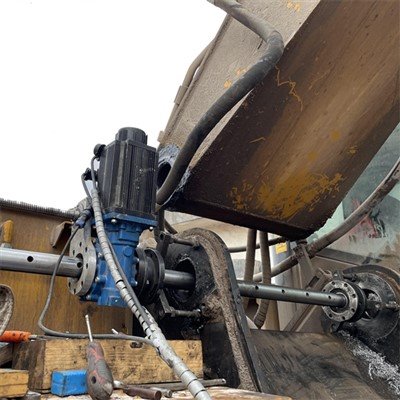
If you’ve got a large diameter thread job coming up—whether it’s external or internal, for construction, energy, heavy equipment, whatever—hit us up to chat through it. We don’t do generic quotes, we don’t cut corners on setups, and we’ve fixed way more botched large thread jobs than we’ve started from scratch. No pressure, just someone who knows this stuff inside and out, and wants to help you avoid the headaches we’ve dealt with over the years.
Line Boring References:
- Modern Machine Shop. (2021). “Challenges in Large-Thread Milling: Tooling and Process Adaptations”. North American Metalworking Association.
- Smith, J. (2019). CNC Thread Milling for Heavy Industrial Applications. Industrial Press Inc.
- Duplex Stainless Steel Machining Guide. (2020). ASM International.
- API 5L Standard Specification for Line Pipe. (2022). American Petroleum Institute.
- Machining Data Handbook, 10th Ed. (2023). Gardner Publications, Inc.
Shangqiu JDA Machinery Technology Co., Ltd.
With abundant experience, we are one of the most professional cnc thread milling manufacturers and suppliers in China. We warmly welcome you to buy cheap cnc thread milling for sale here from our factory. Quality products and reasonable price are available.
Address: No. 55 Pingyuan Middle Road, Liangyuan District, Shangqiu, Henan, China
E-mail: sales@jdamachines.com
WebSite: https://www.jdamachines.com/
