If you’ve ever driven past a regular CNG station, you know they’re big, bulky, and usually only hang out in major cities or along busy highway corridors. That’s where CNG daughter stations come in—they’re the tiny, local sidekicks that pop up in small towns, industrial parks, even grocery store parking lots, making CNG way easier to access for fleets, local drivers, and anyone tired of paying a fortune for gas or diesel. As a CNG daughter station supplier, I talk to potential buyers every single week who ask the same question: “Is it even worth the time, money, and headache to build one of these tiny stations?” Short answer? Hell yeah—thanks to a whole stack of incentives that make this a no-brainer, not just for your wallet but for your community and the planet. Let me break down the real, actionable incentives I see moving the needle for every client I work with, no fancy AI jargon or corporate fluff here. CNG Daughter Station
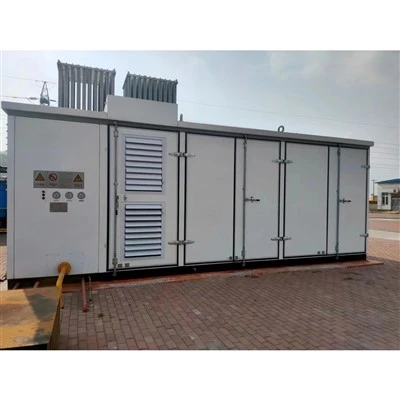
First off, let’s cut to the federal stuff because that’s the big one most people sleep on. The Inflation Reduction Act (IRA) dropped a massive grant program for alternative fuel infrastructure, and it’s not just for the big corporate CNG stations—daughter stations qualify too, which is a game-changer. Wait, let me clarify: daughter stations are different from the “mother” (main) CNG stations, right? A mother station compresses natural gas from a pipeline into high-pressure tanks, then uses big tube trailers to haul that compressed gas to smaller daughter stations, which store it locally and dispense it to vehicles. So you don’t need a pipeline running straight to your location, which is why daughter stations are perfect for places where laying a pipeline would cost an arm and a leg. The IRA’s Alternative Fuel Infrastructure Tax Credit covers up to 30% of the total cost of building a daughter station, including equipment, installation, even permits. I just helped a small waste management company in Ohio lock in this credit last quarter—they built a tiny daughter station for their 12 local garbage trucks, and they got $45,000 back on a $150,000 project. That’s free money, basically. There’s also the Low or No Emission (Low-No) Vehicle Program, which has grants specifically for fleets, and 70% of the time, when a fleet uses CNG, a daughter station is way cheaper to set up than a mother station. I’ve seen school districts use this to build daughter stations for their bus fleets too—one in Indiana got a $200,000 grant to cover most of their station costs, and their bus drivers now fill up at a station 2 blocks from the high school instead of driving 20 minutes to the nearest main CNG station.
State-level incentives are where the real variety comes in, and that’s the part most suppliers (including me) keep a cheat sheet for, because it changes state to state, but it’s all cash back or tax breaks. Let’s take Texas, for example—they have the CNG Infrastructure Tax Exemption, which waives the 6.25% state sales tax on all the equipment you need for a daughter station. A client of mine in Dallas built a station for their delivery fleet, and that saved them $12,000 right off the bat. California is another big one—they have the Clean Vehicle Rebate Project (CVRP) for stations, but it’s tiered for daughter stations because they’re smaller and serve local fleets. If your daughter station is under 500 gallons of storage, you can get up to $100,000 in rebates, and on top of that, California’s Low Carbon Fuel Standard (LCFS) credits add extra cash. Wait, how does that work? Every time someone fills up at your CNG station, the fuel burns cleaner than diesel, so you get credits for reducing greenhouse gas emissions. Those credits are traded on a market, and I’ve seen daughter station owners make $20,000 a year extra just from that, no extra work. Even states that aren’t known for CNG, like Pennsylvania, have incentives now—they have the Alternative Fuel Infrastructure Grant Program, which gives up to $50,000 for small-scale stations like daughter ones, perfect for small businesses. The key here is that you don’t have to chase these incentives alone—good suppliers (that’s me and my team) help you fill out the paperwork, track deadlines, and make sure you’re eligible. I’ve had clients come to me thinking they’d miss out on a state grant, but because I’m familiar with every state’s rules, we got them the money.
Then there’s the local and utility company incentives, which are the hidden gems most people don’t hear about. A lot of cities are desperate to get CNG stations because they cut down on local air pollution, especially in places with a lot of garbage trucks, delivery vans, or school buses. So cities will waive permit fees or even give you free land if you build a daughter station in a priority area. Last year, a city in Michigan gave a local manufacturing company a $15,000 permit waiver and a free 1,000 square foot lot to build their daughter station—they saved more on that than they spent on the site prep. Utility companies also get in on this, because CNG is natural gas, which is cheaper and more domestic than gasoline or diesel. Many utilities will offer you a discounted rate for the gas you use to fuel your daughter station, or even cover part of the compressor’s electricity cost, because they want to move excess natural gas instead of having it flared off (which is bad for the environment and bad for their business). One client in North Carolina got their utility to cover 25% of their monthly electricity bill for the compressor— that’s $500 a month, which adds up to $6,000 a year, no strings attached. I always remind potential buyers to check their local chamber of commerce too—small towns are way more likely to offer these perks than big cities, because they want to attract businesses that reduce emissions and keep money local.
Wait, let’s not forget the long-term operational incentives, because building a station is only half the battle—saving money every month is what makes it worth it. CNG is consistently 30-50% cheaper than diesel, right? For a fleet of 10 delivery vans that drive 10,000 miles a month, that’s about $2,000 in savings every month, just from fuel costs. If you build a daughter station, you don’t have to pay for the markup at public CNG stations—you can bulk purchase the compressed gas at wholesale rates, so those savings are even bigger. Another big one is tax credits for fleet owners: the Alternative Fuel Tax Credit gives fleets a $0.50 per gallon credit for every gallon of CNG they use, which adds up to a lot if you’re running a full fleet. My client in Florida has a fleet of 25 delivery trucks, and that credit saves them $60,000 a year, on top of the fuel savings. Also, many insurance companies offer lower premiums for businesses that use alternative fuels like CNG, because CNG is less flammable than gasoline or diesel. I worked with a trucking company in Illinois that got a 15% discount on their insurance after building their daughter station— that’s another $10,000 a year in savings.
But hold on, I know what some of you are thinking: “This sounds too good to be true, what’s the catch?” The only catch is that you have to pick the right size daughter station for your needs, and work with a supplier who knows how to navigate all these incentives. A lot of people think daughter stations have to be huge, but no—we build them in sizes from 100 gallon storage (perfect for a small local business) up to 1,000 gallon storage (for mid-sized fleets), so you don’t have to overspend on capacity you don’t need. I also see a lot of buyers not applying for all the incentives they’re eligible for, because they don’t know about them, or they’re scared of the paperwork. That’s why my team offers a free incentive consultation—we’ll look at your location, your fleet size, your state and local rules, and tell you exactly how much you can get back, no pressure.
Let me give you a real example to make this concrete. Last year, a small grocery chain in Iowa came to me. They had 8 delivery trucks, driving 800 miles a week each, and they were paying $3.50 a gallon for diesel. The nearest public CNG station was 30 miles away, so their drivers were wasting time and money on extra gas getting there. We built a 500-gallon daughter station for them, total cost $90,000. They qualified for the federal IRA 30% credit ($27,000), a state sales tax exemption ($5,625), and a local grant from the city for reducing delivery emissions ($10,000). Out-of-pocket cost? That’s only $47,375. Now, their fuel cost per gallon is $1.75, so they save $1.75 per gallon, which is $1,120 a week, or $58,240 a year. They also got a $2,000 annual discount from their insurance company, and $1,500 a year in LCFS credits. So even before paying off the initial cost, they’re making a profit every month. That’s not a hypothetical—this is exactly what happened with my client.
And let’s talk about intangibles, because incentives aren’t just about money. Building a daughter station lets you control your own fuel supply, so you don’t have to worry about public station shortages or price hikes. After the 2022 gas crisis, a lot of fleets were stranded because they couldn’t get diesel, but our clients with daughter stations never had that problem. Also, more and more consumers care about sustainable businesses—if a grocery chain or a waste company uses CNG, their customers notice, and that can boost their brand. My waste management client in Ohio told me that their customers appreciate that they’re using cleaner fuel, and they’ve gotten more business as a result.
Wait, I should also mention the different types of daughter stations, because incentives can vary a bit depending on if you’re building a fast-fill or time-fill station. Fast-fill is for fleets that need to fill up quickly, like delivery trucks, and time-fill is for fleets that park overnight, so you fill them up while they’re sleeping. Both qualify for the same incentives, but time-fill is usually smaller, so it’s cheaper to build, which means you get a higher percentage of your cost covered by incentives.
I know a lot of potential buyers have had bad experiences with suppliers before—overpromising, underdelivering, leaving them with a station that doesn’t work and no help getting incentives. That’s why I do things differently. I don’t just sell you a piece of equipment; I walk you through every step: from checking eligibility for all incentives, to getting permits, to installing the station, to training your drivers how to use it, and even helping you track those LCFS credits every quarter. No hidden fees, no fine print, just straight talk about what you can expect.
At the end of the day, building a CNG daughter station isn’t just an investment in fuel—it’s an investment in saving money, reducing emissions, and making your operations more reliable. The incentives are there, but only if you know where to look and how to apply for them. If you’re a fleet owner, small business owner, or city official considering building a CNG daughter station, don’t let the upfront cost scare you away. The savings add up fast, and the incentives cover most of the expense.

If you’re ready to talk about your specific situation, we can sit down and go over exactly what incentives you qualify for, how much your daughter station will cost, and what kind of savings you can expect. No sales pitch, no pressure, just honest advice based on what’s worked for all my other clients. Stop overpaying for gas, wasting time driving to distant stations, and missing out on the cash back that’s available. Reach out today to start the conversation.
CNG Daughter Station References:
- U.S. Department of Energy. (2024). Alternative Fuel Infrastructure Tax Credit. Retrieved from official DOE energy efficiency and renewable energy databases.
- California Air Resources Board. (2023). Low Carbon Fuel Standard (LCFS) Program Annual Report.
- Texas Comptroller of Public Accounts. (2024). Alternative Fuel Equipment Sales Tax Exemption Guidelines.
- U.S. Environmental Protection Agency. (2023). Low-No Emission Vehicle Program Grant Eligibility Rules.
- National Association of Clean Air Agencies. (2024). Local Incentives for Small-Scale Alternative Fuel Stations.
Qingdao Lenado Intelligent Equipment Co., Ltd.
Qingdao Lenado Intelligent Equipment Co., Ltd. is one of the most experienced CNG daughter station manufacturers and suppliers in China. We have world-leading production equipment and strong manufacturing capabilities. Please rest assured to wholesale bulk customized CNG daughter station from our factory.
Address:
E-mail: genkegasstation@163.com
WebSite: https://www.cnggasstation.com/
