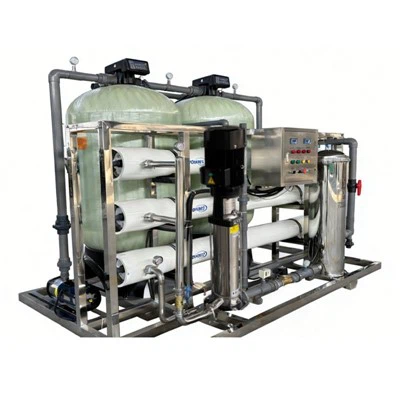
In the realm of water treatment, brackish water reverse osmosis (BWRO) equipment plays a pivotal role in making brackish water suitable for various applications. As a long – standing supplier of SWRO & BWRO equipment, I’ve had the privilege of being involved in countless projects and witnessing the diverse needs of our clients. One of the most frequently asked questions we encounter is: "What is the typical flow rate of BWRO equipment?" SWRO & BWRO Equipment
Understanding Flow Rate in BWRO Equipment
Flow rate, in the context of BWRO equipment, refers to the volume of water that the system can treat and produce in a given period, usually measured in gallons per minute (GPM), cubic meters per hour (m³/h), or other volumetric units. This rate is a crucial parameter that determines the equipment’s capacity to meet the water demands of a particular application, whether it’s for industrial processes, agricultural irrigation, or municipal water supply.
The flow rate of BWRO equipment is influenced by several factors. First and foremost is the membrane area. Reverse osmosis membranes are the heart of BWRO systems, and they work by allowing water molecules to pass through while rejecting dissolved salts and other contaminants. A larger membrane area generally means more surface area for water to permeate, resulting in a higher flow rate. For example, a system with a greater number of membrane elements or larger – sized membranes will have the potential to produce more treated water.
Another significant factor is the feed water quality. Brackish water can vary widely in terms of its salt concentration, temperature, and the presence of other impurities. Higher levels of total dissolved solids (TDS) in the feed water require more energy and pressure to push the water through the membranes, which can reduce the flow rate. Additionally, water temperature affects the viscosity of water; colder water is more viscous, which can slow down the permeation rate through the membranes. As a general rule, for every 1°C drop in water temperature, the permeate flow rate of a RO membrane can decrease by about 2 – 3%.
The operating pressure of the BWRO system also has a direct impact on the flow rate. Higher operating pressures can force more water through the membranes, increasing the flow rate. However, there are limits to how much pressure can be applied, both due to the mechanical limitations of the membranes and the energy consumption implications. Excessive pressure can damage the membranes and lead to higher operational costs.
Typical Flow Rates for Different Applications
Small – Scale Applications
For small – scale applications such as rural households or small industries with relatively low water demands, BWRO systems with flow rates ranging from 1 – 10 GPM (or approximately 0.23 – 2.27 m³/h) are commonly used. These systems are often compact and designed for easy installation and operation. They are suitable for providing potable water for a single family or for small – scale manufacturing processes where only a limited amount of treated water is required.
For instance, a small farm that needs water for a few livestock and a small vegetable garden may opt for a BWRO system with a flow rate of around 3 GPM. This system can supply enough fresh water to meet the daily needs of the animals and keep the plants hydrated without being overly large or expensive.
Medium – Scale Applications
Medium – scale applications, such as medium – sized industries, larger rural communities, or agricultural projects with moderate water requirements, typically require BWRO systems with flow rates in the range of 10 – 100 GPM (2.27 – 22.7 m³/h). These systems are more complex and may consist of multiple membrane vessels and pumps to achieve the desired flow rate.
In a medium – sized textile factory, for example, a BWRO system with a flow rate of 50 GPM is often used. The treated water is used in various stages of the textile manufacturing process, such as dyeing and finishing, where high – quality water is essential to ensure the quality of the final products.
Large – Scale Applications
Large – scale applications, including large municipalities, major industrial complexes, and large – scale desalination projects, demand BWRO systems with much higher flow rates. Flow rates for these systems can range from 100 GPM (22.7 m³/h) up to several thousand GPM (hundreds of m³/h).
In a large city’s water supply system, a BWRO plant with a flow rate of 1000 GPM or more may be installed to supplement the existing water sources. These large – scale systems are highly sophisticated, incorporating advanced control systems, multiple stages of treatment, and large – capacity membrane arrays to handle the massive volume of water treatment required.
Case Studies to Illuminate Flow Rate Requirements
Let’s take a look at a few real – world case studies to better understand how the flow rate of BWRO equipment is tailored to specific needs.
Case Study 1: Small Village Water Supply
In a small village in a semi – arid region, the local water source was brackish, with a TDS of around 2000 ppm. The village had a population of about 200 people, and the daily water demand per person was estimated to be around 50 liters. With a total daily demand of 10,000 liters, or approximately 2642 gallons, a BWRO system with a flow rate of 3 GPM was installed. This system operated for about 14.7 hours a day to meet the village’s water needs.
The system was designed with a relatively small number of membrane elements to keep the cost down, and it was equipped with a basic pre – treatment unit to remove suspended solids and protect the membranes. The low flow rate was sufficient for the small – scale demand, and the system has been providing clean, potable water to the village for several years.
Case Study 2: Industrial Chemical Plant
A chemical plant required a large amount of high – purity water for its production processes. The feed water was brackish, with a high TDS of around 3500 ppm, and the plant needed a continuous supply of 100 m³/h (about 440 GPM) of treated water. A large – scale BWRO system was installed, which consisted of multiple membrane racks, high – pressure pumps, and an advanced pre – treatment system.
The high flow rate was achieved by using a large number of high – performance membranes and operating the system at a relatively high pressure. The system also incorporated a complex control system to optimize the operation based on the feed water quality and the plant’s water demand. This ensured that the chemical plant could maintain its production processes without any water – related interruptions.
Selecting the Right BWRO Equipment Based on Flow Rate
When selecting BWRO equipment based on the flow rate, it’s essential to conduct a thorough analysis of the water demand. This includes understanding the peak and average water usage, as well as any future growth projections. It’s also crucial to consider the feed water quality, as this will affect the membrane selection and the overall system design.
As a supplier of SWRO & BWRO equipment, we offer a wide range of systems with different flow rates to meet the diverse needs of our clients. Our team of experts can assist in the process of determining the appropriate flow rate for your specific application. We take into account all the relevant factors, from feed water quality to operational costs, to design and supply a system that provides the best value for money.
Conclusion and Invitation
The typical flow rate of BWRO equipment varies significantly depending on the application, with small – scale systems having low flow rates and large – scale systems capable of high – volume water treatment. Understanding the factors that influence flow rate and accurately assessing your water demand are key steps in selecting the right BWRO equipment.
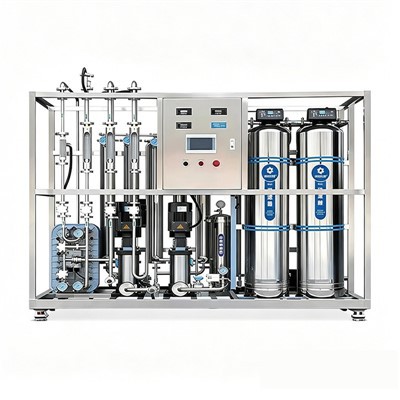
RO Purified Water Equipment If you are in need of BWRO or SWRO equipment and are unsure about the appropriate flow rate for your project, we are here to help. Our experienced team can provide in – depth consultation, customized system design, and reliable after – sales support. We are committed to delivering high – quality water treatment solutions that meet your specific requirements. Contact us to start a discussion about your project and explore how our equipment can transform your water supply.
References
- Crittenden, J. C., Trussell, R. R., Hand, D. W., Howe, K. J., & Tchobanoglous, G. (2012). MWH’s Water Treatment: Principles and Design. Wiley.
- Mulder, M. (1996). Basic Principles of Membrane Technology. Kluwer Academic Publishers.
- Tarhan, L. (2018). Reverse Osmosis Systems: Design, Operation, and Maintenance. Desalitech.
Shandong Yanuo Environmental Protection Equipment Co., Ltd.
We’re well-known as one of the leading swro & bwro equipment manufacturers and suppliers in China, featured by quality products and good price. Please rest assured to buy bulk swro & bwro equipment made in China here from our factory. Customized orders are welcome.
Address: North Side of the Road, 1,000 Meters West of the Intersection of Fenghuangshan West Road and Provincial Highway S102, Wangfu Subdistrict, Qingzhou City, Weifang City, Shandong Province.
E-mail: ynhb.499973983@gmail.com
WebSite: https://www.zkyaruo.com/
