Capacitors are a fundamental component in the world of electronics, and as a capacitor supplier, I’ve witnessed firsthand their crucial role in countless applications. In this blog, I’ll delve into the inner workings of capacitors, exploring their basic principles, construction, and various types, and also touch on their significance in the electronics industry. Capacitor

Basic Principles of Capacitors
At its core, a capacitor is a passive two – terminal electrical component that stores energy in an electric field. The basic concept behind a capacitor can be understood by considering two conductive plates separated by an insulating material, known as a dielectric. When a voltage is applied across the two terminals of the capacitor, electrons are pushed onto one plate, giving it a negative charge, while an equal number of electrons are pulled off the other plate, leaving it with a positive charge.
This separation of charge creates an electric field between the two plates. The strength of the electric field is directly proportional to the voltage applied across the capacitor and inversely proportional to the distance between the plates. The ability of a capacitor to store charge is measured by its capacitance, denoted by the symbol (C), and is expressed in farads (F). However, the farad is a very large unit, and in practical applications, capacitors typically have capacitances ranging from picofarads ((pF), (10^{- 12}) F) to millifarads ((mF), (10^{-3}) F).
The relationship between the charge (Q) stored on a capacitor, its capacitance (C), and the voltage (V) across it is given by the formula (Q = C\times V). This formula implies that for a given capacitance, the amount of charge stored on the capacitor is directly proportional to the applied voltage.
Construction of Capacitors
Capacitors come in a wide variety of shapes and sizes, but their basic construction follows the principle of two conductive plates separated by a dielectric. The conductive plates are usually made of metals such as aluminum, tantalum, or silver. The choice of metal depends on factors such as conductivity, cost, and the specific application requirements.
The dielectric material plays a crucial role in determining the performance of the capacitor. Different dielectric materials have different dielectric constants (\epsilon), which is a measure of the ability of the material to store electrical energy in an electric field. Some common dielectric materials include ceramic, mica, paper, and plastic films.
For example, ceramic capacitors are widely used due to their small size, high capacitance values, and low cost. They are made by coating two ceramic layers with a conductive material and then stacking them together. The dielectric constant of ceramic materials can be quite high, allowing for the construction of capacitors with relatively large capacitances in a small package.
Tantalum capacitors, on the other hand, use tantalum metal as the anode and a very thin layer of tantalum pentoxide as the dielectric. Tantalum capacitors are known for their high capacitance per unit volume, good stability, and low leakage current. They are often used in applications where space is limited, such as mobile phones and other portable electronic devices.
Types of Capacitors and Their Applications
There are several types of capacitors, each with its own unique characteristics and applications. Let’s take a closer look at some of the most common types.
Ceramic Capacitors
As mentioned earlier, ceramic capacitors are extremely popular. They can be classified into two main categories: ceramic disc capacitors and multilayer ceramic capacitors (MLCCs). Ceramic disc capacitors are simple in construction and are commonly used in low – frequency applications, such as coupling and bypass circuits.
MLCCs, however, are more complex. They are made by stacking multiple layers of ceramic dielectric and conductive electrodes. This construction allows for a much higher capacitance in a smaller package compared to ceramic disc capacitors. MLCCs are widely used in high – frequency applications, such as radio frequency (RF) circuits, due to their excellent high – frequency performance and low equivalent series resistance (ESR).
Electrolytic Capacitors
Electrolytic capacitors are another common type. They have a relatively high capacitance value and are polarized, which means they must be connected to a circuit with the correct polarity. There are two main types of electrolytic capacitors: aluminum electrolytic capacitors and tantalum electrolytic capacitors.
Aluminum electrolytic capacitors are widely used in power supply circuits to filter out ripple voltage. They can handle relatively large amounts of current and are available in a wide range of capacitance values. However, they have a relatively high ESR and a limited lifespan, especially at high temperatures.
Tantalum electrolytic capacitors, as mentioned before, are more expensive but offer better performance in terms of capacitance per unit volume, stability, and leakage current. They are often used in critical applications where space is limited and performance is crucial, such as in medical devices and aerospace electronics.
Film Capacitors
Film capacitors use a thin plastic film as the dielectric. They are available in various types, including polyester, polypropylene, and polystyrene. Film capacitors are known for their good stability, low dielectric loss, and high insulation resistance.
Polyester film capacitors are relatively inexpensive and have a wide range of capacitance values. They are commonly used in general – purpose applications, such as coupling and filtering circuits. Polypropylene film capacitors, on the other hand, have a very low dielectric loss and excellent self – healing properties. They are often used in high – quality audio circuits and power factor correction circuits.
The Significance of Capacitors in the Electronics Industry
Capacitors are ubiquitous in the electronics industry, and their importance cannot be overstated. In power supplies, capacitors are used to filter out ripple voltage, ensuring a stable and smooth DC output. This is crucial for the proper operation of electronic devices, as any fluctuations in the power supply can cause malfunctions or damage to the components.
In signal processing circuits, capacitors are used for coupling and decoupling. Coupling capacitors are used to block DC signals while allowing AC signals to pass through, enabling the transfer of signals between different stages of an amplifier without affecting the DC bias conditions. Decoupling capacitors, on the other hand, are used to reduce noise and interference in power lines, ensuring a clean and stable power supply to sensitive components.
In RF circuits, capacitors are used to tune resonant circuits, filter out unwanted frequencies, and match the impedance of different components. They play a crucial role in the performance of wireless communication devices, such as mobile phones, Wi – Fi routers, and radio transmitters.
Conclusion and Call to Action
Understanding how capacitors work is essential for anyone involved in the electronics industry, whether you’re an engineer designing new circuits, a technician troubleshooting electronic devices, or a buyer sourcing components for your production line.
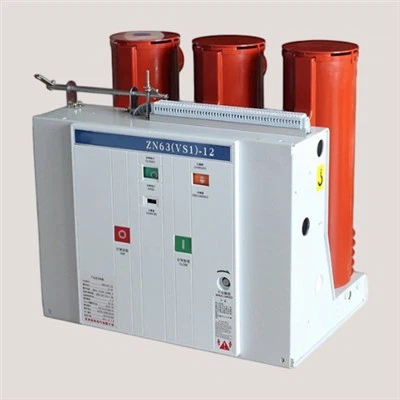
As a capacitor supplier, I am committed to providing high – quality capacitors that meet the diverse needs of our customers. Our extensive range of capacitors includes ceramic, electrolytic, and film capacitors, each carefully selected for its performance and reliability. Whether you need capacitors for a small DIY project or large – scale production, we have the right solution for you.
Vacuum Relay If you’re interested in learning more about our capacitor products or have specific requirements for your next project, I encourage you to reach out to our sales team for a detailed consultation. We look forward to discussing your needs and helping you find the best capacitor solutions for your applications.
References
- Boylestad, R. L., & Nashelsky, L. (2009). Electronic Devices and Circuit Theory. Pearson Prentice Hall.
- Sedra, A. S., & Smith, K. C. (2015). Microelectronic Circuits. Oxford University Press.
- Millman, J., & Grabel, A. (1987). Microelectronics. McGraw – Hill.
Jingdezhen Wanping Electric Co., Ltd.
As one of the most professional capacitor manufacturers and suppliers in China, we also support customized service. We warmly welcome you to buy high quality capacitor made in China here and get pricelist from our factory. For price consultation, contact us.
Address: Zhangshukeng, Jingdezhen City, Jiangxi Province.
E-mail: jdzwpdq0815@163.com
WebSite: https://www.cewpdq.com/
